The Mediterranean Way of Eating: What the Research Says and How to Try It
A flexible, plant-forward pattern built on vegetables, beans, whole grains, olive oil and fish. What the evidence does and does not show, and easy ways to bring it to your table.
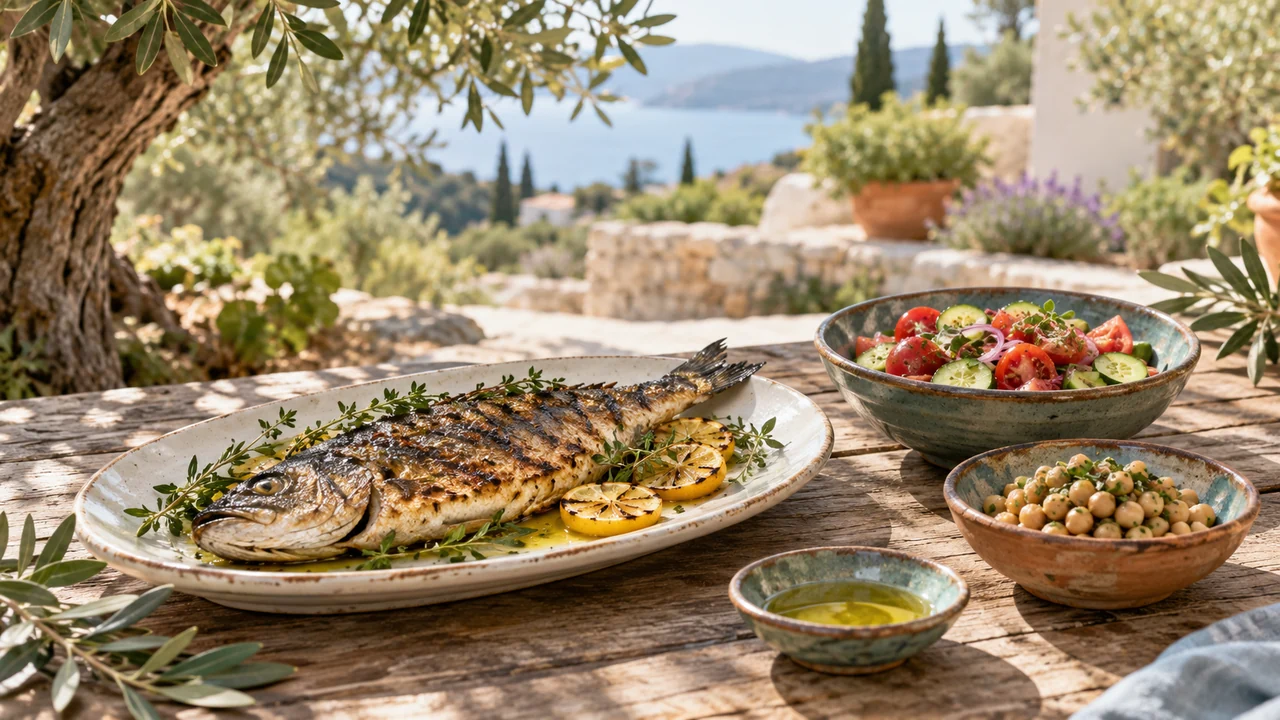
Plenty of eating styles come with a long list of banned foods. The Mediterranean pattern works differently. It describes a way of filling your plate, drawn from the traditional cooking of the countries around the Mediterranean Sea, and it leaves room for your own tastes, budget and training week.
Below: what the pattern usually includes, why heart-health organizations point to it, what a well-known trial found (and did not), and simple ways to try it this week.
- The Mediterranean pattern is a flexible, plant-forward way of eating built around vegetables, fruit, whole grains, beans, nuts, seeds, olive oil and regular fish.
- Heart-health guidance from the American Heart Association and the World Health Organization aligns closely with this pattern and can be adapted to your culture, tastes and budget.
- The 2018 reanalyzed PREDIMED trial found lower combined rates of major cardiovascular events in older high-risk Spanish adults, though study limitations and population scope apply.
- Staples like fish, beans, lentils, chickpeas, yogurt, eggs and poultry fit naturally into a strength training week without requiring alcohol or rigid meal rules.
A pattern, not a rulebook
There is no single official Mediterranean menu. The American Heart Association (AHA) points out that at least 16 countries border the Mediterranean, and that eating habits vary between them, and between regions within each, because of culture, religion, economy and geography. They do share a general shape.
In the AHA description, that shape is plenty of vegetables, fruit, bread and other grains, potatoes, beans, nuts and seeds; olive oil as the main fat; fish and poultry more often than red meat; dairy and eggs in low to moderate amounts; and fruit as a common dessert. The focus is on minimally processed foods, mostly from plants.
- Most meals: vegetables, fruit, whole grains, beans, lentils, nuts and seeds
- Main cooking fat: olive oil
- Regularly: fish and poultry, more often than red meat
- Low to moderate amounts: eggs, cheese and yogurt
- Less often: red and processed meat, sweets and sugary drinks
Why health organizations point to it
The AHA says a Mediterranean-style diet can help you meet its recommendations for a heart-healthy pattern: one that emphasizes vegetables, fruit, whole grains and legumes, includes fish, nuts and non-tropical vegetable oils, and limits added sugars, sodium, highly processed foods and fatty or processed meats.
A 2023 AHA scientific statement compared popular eating styles with the AHA’s 2021 dietary guidance. It listed the Mediterranean pattern among several that align strongly with that guidance, alongside DASH, pescetarian and vegetarian eating, and noted that each can be adapted to personal and cultural preferences and to a budget.
The World Health Organization’s healthy diet fact sheet sets out principles that overlap closely: carbohydrates mainly from whole grains, vegetables, fruit and pulses; at least 400 grams of fruit and vegetables a day; unsaturated fats, such as olive oil, in preference to saturated fats; and limits on free sugars and on salt (less than 5 grams a day for adults). WHO also says the exact make-up of a healthy diet varies with age, activity level, culture and the foods available locally.
So the Mediterranean pattern is one familiar way to put widely shared advice on a plate, not the only way.
Related read: Healthy Eating That Fits Your Everyday Life
What the PREDIMED trial found, and its limits
Much of the attention comes from a Spanish trial called PREDIMED, first published in 2013. The researchers later found problems with how some people had been placed into groups: some household members joined without being randomly assigned, one of the 11 study sites assigned whole clinics rather than individuals, and another site appears to have used its randomization tables inconsistently. The original paper was withdrawn, and a corrected, reanalyzed report was published in the New England Journal of Medicine in 2018.
In that 2018 report, 7,447 adults aged 55 to 80, with no cardiovascular disease at the start but at high cardiovascular risk (for example, type 2 diabetes or several risk factors such as high blood pressure or smoking), followed a Mediterranean diet with extra olive oil, a Mediterranean diet with extra nuts, or a control diet with advice to cut fat. Over a median of 4.8 years, a combined outcome of heart attack, stroke or death from cardiovascular causes happened less often in the two Mediterranean groups (3.8% and 3.4% of participants) than in the control group (4.4%). Results were similar when the authors left out the participants whose group assignment was known or suspected not to have followed the protocol.
Read those numbers carefully:
- The people studied were older Spanish adults already at high cardiovascular risk. The authors themselves say more research is needed to know whether the results apply to people at lower risk, or even to high-risk people in other countries.
- Because randomization was not followed for everyone, the reanalysis leaned on statistical adjustments. That makes the evidence less clean than an intact randomized trial.
- The outcome was a combined count of cardiovascular events. The trial did not test weight loss, strength, muscle gain or sports performance, and the advice included no calorie limit or extra exercise.
- A 2019 Cochrane review that pooled many trials concluded there is still some uncertainty about the effects of Mediterranean-style diets, with low to moderate quality evidence for modest improvements in some risk factors in people without existing heart disease.
None of this makes the pattern a poor choice. The research supports it as a sensible, heart-friendly way of eating, not a guarantee for any one person.
Where it fits if you train
Nothing in this pattern gets in the way of training. Many of its staples are practical protein sources: fish, beans, lentils, chickpeas, yogurt, eggs and poultry. The AHA’s 2021 guidance suggests getting protein mostly from plants, with regular fish and seafood, and choosing lean, unprocessed cuts if you eat meat. Whole grains, potatoes and fruit supply carbohydrates, and olive oil, nuts and seeds add unsaturated fats.
Amounts depend on your body, goals and training, so use the pattern as a guide to what goes on your plate, not a set of portions.
Five easy ways to start this week
- Make olive oil your everyday cooking oil. Use it to roast vegetables, dress a salad or finish a bowl of grains.
- Add beans twice. Stir chickpeas or lentils into a soup, salad, wrap or pasta sauce you already make.
- Plan one or two fish meals. Canned sardines, salmon or tuna, or frozen fillets, keep cost and effort down; check the label for salt.
- Swap one refined grain for a whole grain, such as brown rice, whole-wheat pasta, bulgur or oats.
- On a few days, make fruit, a small handful of nuts or plain yogurt your snack or dessert.
Pick one or two, not all five. Dishes from your own culture may already share this shape, and adding a vegetable or a scoop of beans to a meal you love counts as much as a new recipe.
A note on wine
Some descriptions of the traditional Mediterranean diet mention wine with meals. That is history, not advice. The AHA’s guidance is direct: if you do not drink alcohol, do not start, and if you do drink, limit it. A 2023 WHO statement, reported by WHO Europe, says there is no amount of alcohol that is safe for health. Every other part of this pattern works without any alcohol at all.
Make it your own
Treat the pattern as a direction, not a test you pass or fail. After a week or two, keep the changes that felt easy and enjoyable, and shrink or swap the ones that felt like a chore.
Try it: an optional example plate
A bowl of brown rice or farro, peppers and zucchini roasted in olive oil, a scoop of chickpeas or a piece of baked fish, a spoonful of yogurt with herbs, and fruit afterwards. Swap anything for allergies, preferences, or what is in season and affordable.
Sources
- American Heart Association: What is the Mediterranean diet?
- American Heart Association: 2021 Dietary guidance to improve cardiovascular health (Lichtenstein et al., Circulation 2021)
- American Heart Association: Popular dietary patterns, alignment with 2021 dietary guidance (Gardner et al., Circulation 2023)
- WHO: Healthy diet fact sheet
- Estruch et al. PREDIMED, corrected and republished report. N Engl J Med 2018;378:e34
- Rees et al. Mediterranean-style diet for the prevention of cardiovascular disease. Cochrane review, 2019
- WHO Europe: No level of alcohol consumption is safe for our health
Links are to primary sources and guidance and are not endorsements of LiftIQ. Photo: illustrative.
Keep reading



Keep exploring
Read as much as you like. An account is for following your own plan and progress.