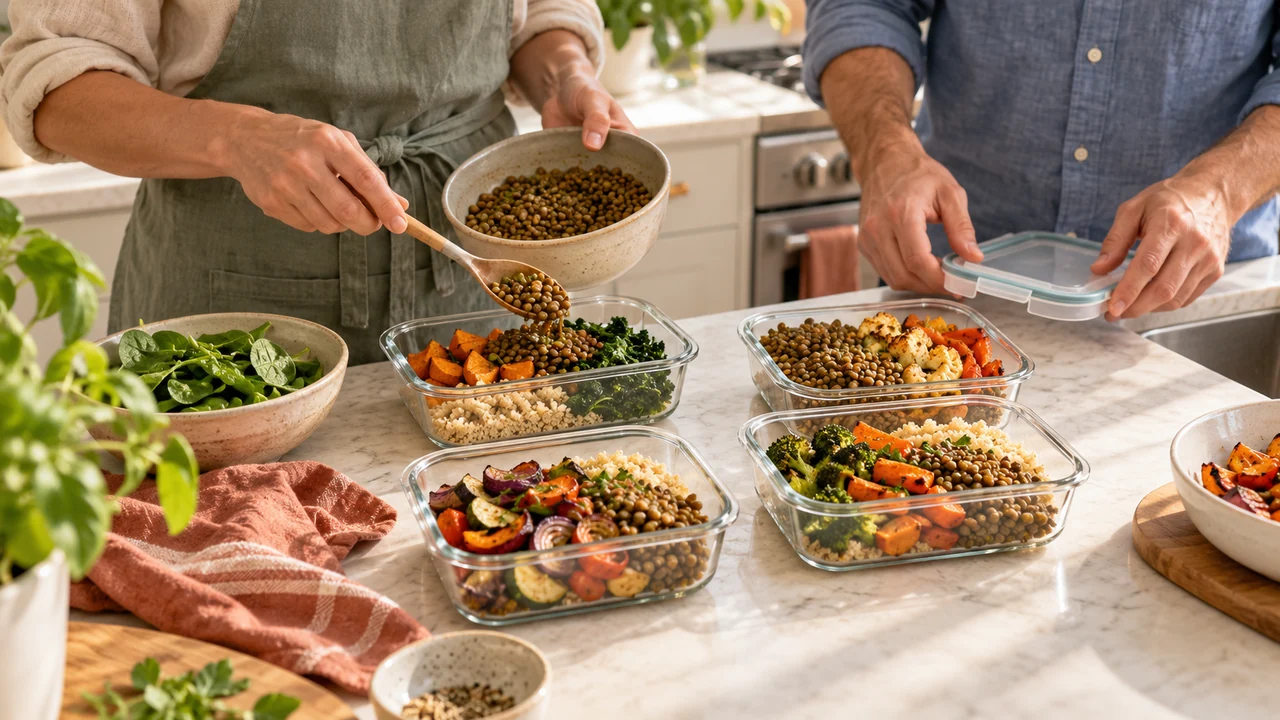

Meal planning is less about perfect menus and more about making the busiest days easier. This guide walks through a simple weekly approach, including how to store and reheat food safely.
- Check your calendar first and plan two or three simple dinners or leftovers for your busiest evenings.
- Reuse shared ingredients across meals and write your grocery list by store section after checking what you already have.
- Refrigerate cooked food within two hours (one hour above 90°F / 32°C) in shallow containers at or below 40°F (4°C).
- Eat refrigerated leftovers within three to four days, freeze portions for later in the week, and reheat to 165°F (74°C).
Map your busy evenings
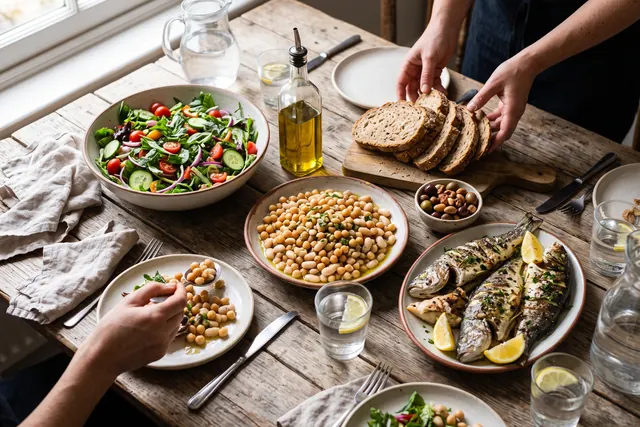
Start with your calendar. Which evenings are late, rushed or unpredictable? Plan the simplest meals, or leftovers, for those, and save cooking for calmer days.
You do not have to plan every meal. Many people find it easier to plan two or three dinners and keep the rest flexible.
Share ingredients across meals
Choosing meals that use some of the same ingredients reduces waste and shopping: a pot of beans can go into a stew, a salad and a wrap.
Check what you already have before you shop, and write your list by store section to make the trip quicker.
Related read: Healthy Eating That Fits Your Everyday Life
Prep, batch cook or assemble
There are several ways to save time: prepare ingredients in advance (washing and chopping vegetables), cook a larger batch to eat over several days, or assemble meals from ready-to-use ingredients. Choose whatever fits your week.
If you cook in bulk, divide food into shallow containers so it cools quickly in the refrigerator.
Store and reheat safely
Refrigerate perishable food within two hours of cooking, or within one hour if the temperature is above 90°F (32°C). Keep your refrigerator at or below 40°F (4°C). Leftovers are generally good for three to four days in the refrigerator, so freeze portions you plan to eat later in the week. Reheat leftovers to 165°F (74°C).
Smell is not a reliable test of safety, and reheating does not fix food that has been stored unsafely.
Labeling containers with the date you cooked makes it easier to keep track. If you are not sure how long something has been stored, it is safer to throw it out.
Quantities and backup options
Plan for roughly the amount you will eat, and keep a few easy backups, such as frozen vegetables, eggs or canned beans, for the evenings that do not go to plan.
Try it: an optional example
Make a bean and vegetable stew. Divide it into shallow containers and refrigerate promptly. Keep the portions for Monday and Tuesday in the refrigerator, and freeze the portion for Friday.
Sources
- NIH Wellness: Meal planning
- FoodSafety.gov: 4 steps to food safety
- FoodSafety.gov: Game day food safety tips
Written from primary sources. Review by a qualified professional is pending. General information, not medical advice. Links are to primary sources and are not endorsements of LiftIQ. Photos are illustrative.
Related guides

Keep exploring
Read as much as you like. An account is for following your own plan and progress.