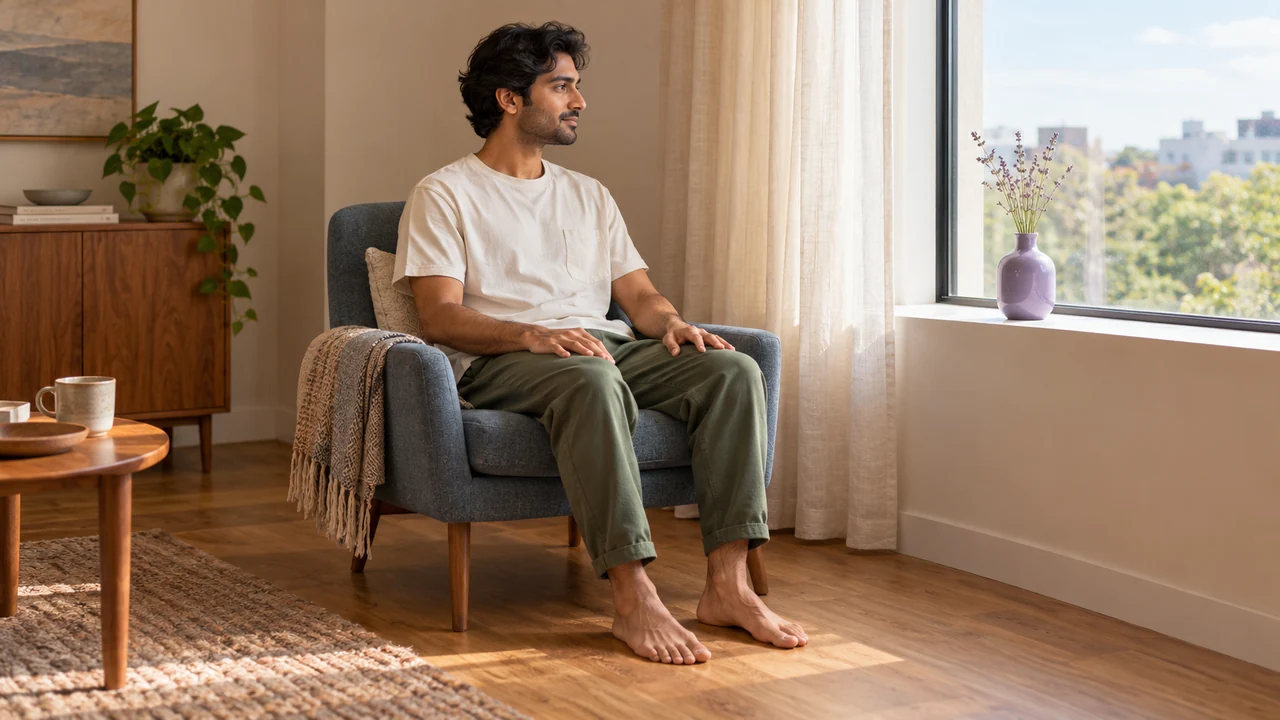

Meditation covers many practices. Some people find them helpful; others prefer different ways to rest. This guide explains the options so you can decide what, if anything, suits you. It is a written guide: guided meditation sessions are not yet available in the LiftIQ app.
- An empty mind is not the goal; noticing when attention wanders and gently returning it is normal practice.
- You can sit, stand or lie down, keep your eyes open, and choose a neutral anchor like a sound or object in the room.
- Start with a minute or less in a safe place (never while driving), and stop at any time if it feels uncomfortable.
- Research findings are mixed and meditation does not replace medical or mental health care.
Attention and awareness vary; an empty mind is not the goal

Many meditation practices involve placing attention on something, noticing when it wanders, and gently returning it. Others involve noticing whatever is present without following it. In both, thoughts arising is normal. The aim is not to empty your mind, and a wandering mind does not mean you are doing it wrong.
Comfortable seating, eyes open and gentle anchors
You can sit on a chair with your feet on the floor, use cushions or a wall for support, stand, or lie down if that is more comfortable. You can keep your eyes open, looking softly at a spot in front of you. An "anchor" for attention can be something neutral, such as the color of an object, a sound in the room, or the feeling of your feet on the floor.
You can stop at any time, for any reason.
Related read: Everyday Ways to Make Stress More Manageable
An optional short practice
If you want to try, start with a minute or less, at a time and place where it is safe to pause. That rules out driving or anything that needs your full attention.
Silence, text or audio
Some people practise in silence, some follow written instructions, and some prefer recorded guidance. If you use audio, look for options with transcripts, so you can read along or follow without sound. Choose the format that is easiest for you to return to.
What the evidence says, and when to seek support
Research on meditation is mixed, and many studies have limitations. Some people report benefits; others notice no change. Negative experiences are possible, including increased anxiety or difficult feelings. Meditation does not replace medical or mental health care.
If practising brings up distress, or if you are struggling with your mental health, talk to a qualified professional or someone you trust.
Try it: an optional one-minute pause
In a safe place, never while driving, keep your eyes open and notice one neutral object nearby: its color or its shape. When your attention drifts, bring it back without judging yourself. Finish whenever you like. If it feels uncomfortable, stop: look around the room, feel the chair or floor beneath you if that is comfortable, and return to an ordinary activity, such as drinking some water or talking with someone you trust.
Sources
- NCCIH: Meditation and mindfulness, effectiveness and safety
- WHO EMRO: Dealing with stress
- WHO: Doing What Matters in Times of Stress (link only; its art and audio have non-commercial terms)
Written from primary sources. Review by a qualified professional is pending. General information, not medical advice. Links are to primary sources and are not endorsements of LiftIQ. Photos are illustrative.
Related guides



Keep exploring
Read as much as you like. An account is for following your own plan and progress.